Pages

Showing posts with label history. Show all posts

Thursday, 7 April 2011

Biography Of My Favorite Photographer : Annie Leibovitz


Born in 1949 in Waterbury, Connecticut, Annie Leibovitz enrolled in the San Francisco Art Institute intent on studying painting. It was not until she traveled to Japan with her mother the summer after her sophomore year that she discovered her interest in taking photographs. When she returned to San Francisco that fall, she began taking night classes in photography. Time spent on a kibbutz in Israel allowed her to hone her skills further.
 
In 1970 Leibovitz approached Jann Wenner, founding editor of Rolling Stone, which he’d recently launched and was operating out of San Francisco. Impressed with her portfolio, Wenner gave Leibovitz her first assignment: shoot John Lennon. Leibovitz’s black-and-white portrait of the shaggy-looking Beatle graced the cover of the January 21, 1971 issue. Two years later she was named Rolling Stone chief photographer.


When the magazine began printing in color in 1974, Leibovitz followed suit. “In school, I wasn’t taught anything about lighting, and I was only taught black-and-white,” she told ARTnews in 1992. “So I had to learn color myself.” Among her subjects from that period are Bob Dylan, Bob Marley, and Patti Smith. Leibovitz also served as the official photographer for the Rolling Stones’ 1975 world tour. While on the road with the band she produced her iconic black-and-white portraits of Keith Richards and Mick Jagger, shirtless and gritty.


In 1980 Rolling Stone sent Leibovitz to photograph John Lennon and Yoko Ono, who had recently released their album “Double Fantasy.” For the portrait Leibovitz imagined that the two would pose together nude. Lennon disrobed, but Ono refused to take off her pants. Leibovitz “was kinda disappointed,” according to Rolling Stone, and so she told Ono to leave her clothes on. “We took one Polaroid,” said Leibovitz, “and the three of us knew it was profound right away.” The resulting portrait shows Lennon nude and curled around a fully clothed Ono. Several hours later, Lennon was shot dead in front of his apartment. The photograph ran on the cover of the Rolling Stone Lennon commemorative issue. In 2005 the American Society of Magazine Editors named it the best magazine cover from the past 40 years.


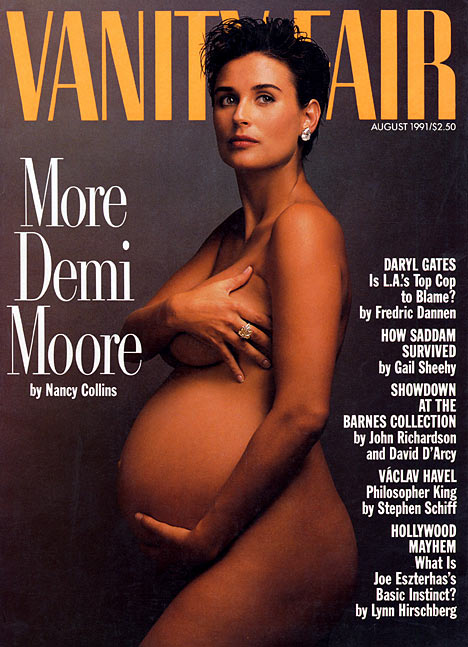
Annie Leibovitz: Photographs, the photographer’s first book, was published in 1983. The same year Leibovitz joined Vanity Fair and was made the magazine’s first contributing photographer. At Vanity Fair she became known for her wildly lit, staged, and provocative portraits of celebrities. Most famous among them are Whoopi Goldberg submerged in a bath of milk and Demi Moore naked and holding her pregnant belly. (The cover showing Moore — which then-editor Tina Brown initially balked at running — was named second best cover from the past 40 years.) Since then Leibovitz has photographed celebrities ranging from Brad Pitt to Mikhail Baryshnikov. She’s shot Ellen DeGeneres, the George W. Bush cabinet, Michael Moore, Madeleine Albright, and Bill Clinton. She’s shot Scarlett Johannson and Keira Knightley nude, with Tom Ford in a suit; Nicole Kidman in ball gown and spotlights; and, recently, the world’s long-awaited first glimpse of Suri Cruise, along with parents Tom and Katie. Her portraits have appeared in Vogue, The New York Times Magazine, and The New Yorker, and in ad campaigns for American Express, the Gap, and the Milk Board.



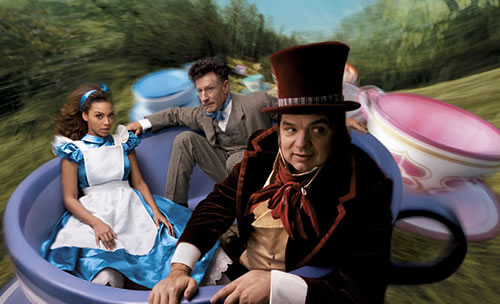


how cute all beings a real disney
Among other honors, Leibovitz has been made a Commandeur des Ordre des Arts et des Lettres by the French government and has been designated a living legend by the Library of Congress. Her first museum show, Photographs: Annie Leibovitz 1970-1990, took place in 1991 at the National Portrait Gallery in Washington, D.C. and toured internationally for six years. At the time she was only the second living portraitist — and the only woman — to be featured in an exhibition by the institution.

Leibovitz met Susan Sontag in 1989 while photographing the writer for her book AIDS and its Metaphors. “I remember going out to dinner with her and just sweating through my clothes because I thought I couldn’t talk to her,” Leibovitz said in an interview with The New York Times late last year. Sontag told her, “You’re good, but you could be better.” Though the two kept separate apartments, their relationship lasted until Sontag’s death in late 2004.


Sontag’s influence on Leibovitz was profound. In 1993 Leibovitz traveled to Sarajevo during the war in the Balkans, a trip that she admits she would not have taken without Sontag’s input. Among her work from that trip is Sarajevo, Fallen Bicycle of Teenage Boy Just Killed by a Sniper, a black-and-white photo of a bicycle collapsed on blood-smeared pavement. Sontag, who wrote the accompanying essay, also first conceived of Leibovitz’s book Women (1999). The book includes images of famous people along with those not well known. Celebrities like Susan Sarandon and Diane Sawyer share space with miners, soldiers in basic training, and Las Vegas showgirls in and out of costume.


 Leibovitz’s most recent book, A Photographer’s Life: 1990-2005, includes her trademark celebrity portraits. But it also features personal photographs from Leibovitz’s life: her parents, siblings, children, nieces and nephews, and Sontag. Leibovitz, who has called the collection “a memoir in photographs,” was spurred to assemble it by the deaths of Sontag and her father, only weeks apart. The book even includes photos of Leibovitz herself, like the one that shows her nude and eight months pregnant, à la Demi Moore. That picture was taken in 2001, shortly before Leibovitz gave birth to daughter Sarah. Daughters Susan and Samuelle, named in honor of Susan and Leibovitz’s father, were born to a surrogate in 2005.

Leibovitz composed these personal photographs with materials that she used when she was first starting out in the ’70s: a 35-millimeter camera, black-and-white Tri X film. “I don’t have two lives,” she writes in the book’s introduction. “This is one life, and the personal pictures and the assignment work are all part of it.” Still, she told the Times, this book is the “most intimate, it tells the best story, and I care about it.”

courtesy: http://www.pbs.org and mr. google :D

Wednesday, 23 February 2011

Saturday, 22 January 2011

Kevin Carter


Sampai saat ini, rumor tentang foto karya Kevin Carter (Afrika Selatan) yang ada di halaman ini masih simpang siur. Foto peraih Hadiah Pulitzer tahun 1994 yang menampilkan seorang anak kecil kurus kering dengan latar belakang seekor burung pemakan bangkai ini hampir selalu dikaitkan dengan peristiwa bunuh diri yang dilakukan pemotretnya.

Rumor yang beredar mengatakan, Carter bunuh diri karena menyesal tidak menolong anak itu, tetapi malah memotretnya, bahkan lalu meraih hadiah jurnalistik bergengsi.

Rumor yang tak jelas benar asal-usulnya ini bertutur lebih jauh, Carter menulis di buku hariannya seusai memotret foto itu, ”Ya Tuhan, aku tidak akan menyia-nyiakan makanan lagi walau rasanya setidak enak apa pun.” Di situs BBC, jelas-jelas ada bantahan bahwa kalimat itu tidak pernah ditulis atau diucapkan Carter di mana pun.

Dari penelusuran ke berbagai sumber, didapat kesimpulan bahwa Carter tak mungkin bunuh diri karena foto itu. Carter tahu benar bahwa anak itu tidak dalam bahaya sama sekali.

Foto itu dibuat bukan di tempat terpencil, melainkan di sebuah acara pembagian makanan. Bahkan, Carter berlutut sekitar 20 menit di depan anak itu. Ia memotret beberapa kali sampai tiba-tiba seekor burung pemakan bangkai hinggap di latar belakang. Carter juga sempat menunggu agar sang burung pemakan bangkai mengembangkan sayapnya untuk mendapatkan foto yang lebih dramatis. Selain itu, orangtua atau kerabat si anak juga berdiri tak jauh dari situ, sibuk meraih pembagian makanan. Seusai memotret, Carter juga sempat mengusir sang burung pemakan bangkai.

Berikut ini cerita yang disampaikan Joao Silva yang bersama Carter berada di tempat pemotretan, seperti dituturkan kepada penulis Jepang, Akio Fujiwara, dan dimuat dalam buku berjudul The Boy who Became a Postcard (terbitan Ehagakini Sareta Shonen).

Saat itu, tanggal 11 Maret 1993, Carter dan Silva mendarat di bagian utara Sudan untuk meliput kelaparan parah yang sedang terjadi di sana. Mereka berdua turun dari pesawat PBB yang memang akan menurunkan bantuan pangan. Tim kesehatan PBB memberi tahu keduanya bahwa mereka akan tinggal landas lagi 30 menit kemudian.

Dalam 30 menit itu, tim PBB memang membagi-bagikan makanan. Carter dan Silva cukup terkesima melihat orang-orang kelaparan yang berebut makanan pembagian. Anak yang dipotret Carter pun dipotret Silva walau tidak dipublikasikan. Menurut Silva, Carter memotret dari jarak sekitar 10 meter dan di belakang Carter adalah suasana orang ramai berebut makanan.

Satu yang penting dari kejadian itu adalah seusai memotret, Carter duduk di bawah pohon dan tampak tertekan.

”Dia berkata rindu dan ingin memeluk Megan, putrinya,” kata Silva.

Carter memang punya seorang anak perempuan bernama Megan, kelahiran 1977, di luar nikah dengan Kathy Davidson, seorang guru sekolah.

Pada waktu bunuh diri pun, surat yang ditinggalkan Carter berisi tulisan sebagai berikut: ”I am depressed … without phone … money for rent … money for child support … money for debts … money!!! … I am haunted by the vivid memories of killings and corpses and anger and pain … of starving or wounded children, of trigger-happy madmen, often police, of killer executioners…I have gone to join Ken if I am that lucky…”

Carter bunuh diri 27 Juli 1994 beberapa pekan setelah meraih Hadiah Pulitzer dengan cara menutup diri di dalam mobil pikupnya, lalu mengalirkan gas knalpot ke dalam. Ia bunuh diri karena depresi pada kenyataan hidup yang kejam dan keras. Carter juga menangisi kematian sahabatnya, Ken Oosterbroek, sesama fotografer jurnalistik, yang meninggal saat meliput sebuah kerusuhan. 
(sumber:http://blog.isi-dps.ac.id/budiwijaya/kisah-sebuah-foto-dan-rumornya)

Well, it's so dramatic. Pasti sangat tertekan berada di suasana yang seperti itu namun kamu harus tetap bekerja sebagai fotografer profesional yang siap menangkap peristiwa-peristiwa penting yang terjadi di sekitarmu. Sampai akhirnya si juru kamera memutuskan untuk mengakhiri hidupnya karena tak kuasa melihat orang-orang sekitarnya yang sangat menderita. Manic street preacher said "The elephant is so ugly he sleeps his head, Machetes his bed Kevin Carter kaffir lover forever, click click click click click, click himself under..."


Friday, 14 January 2011

History of Photography Timeline

  • ancient times : Camera obscuras used to form images on walls in darkened rooms; image formation via a pinhole Zaman kuno: Kamera obscuras digunakan untuk membentuk gambar pada dinding-dinding di ruangan gelap; gambar pembentukan melalui lubang jarum
  • 16th century : Brightness and clarity of camera obscuras improved by enlarging the hole inserting a telescope lens Abad ke-16: Kecerahan dan kejelasan kamera obscuras ditingkatkan dengan memperbesar lubang memasukkan lensa teleskop
  • 17th century : Camera obscuras in frequent use by artists and made portable in the form of sedan chairs Abad ke-17: Kamera obscuras di sering digunakan oleh seniman dan dibuat portabel dalam bentuk tandu
  • 1727 : Professor J. Schulze mixes chalk, nitric acid, and silver in a flask; notices darkening on side of flask exposed to sunlight. 1727: Professor J. Schulze campuran kapur, asam nitrat, dan perak dalam termos; pemberitahuan sisi gelap di termos terkena sinar matahari. Accidental creation of the first photo-sensitive compound. Terkadang penciptaan foto pertama yang sensitif terhadap senyawa.
  • 1800 : Thomas Wedgwood makes “sun pictures” by placing opaque objects on leather treated with silver nitrate; resulting images deteriorated rapidly, however, if displayed under light stronger than from candles. 1800: Thomas Wedgwood membuat “matahari gambar-gambar” dengan menempatkan objek pada kulit buram diperlakukan dengan perak nitrat; gambar yang dihasilkan dengan cepat memburuk Namun, jika ditampilkan di bawah lebih kuat daripada cahaya dari lilin.
  • 1816 : Nicéphore Niépce combines the camera obscura with photosensitive paper 1816: Nicéphore Niépce menggabungkan kamera obscura dengan kertas fotosensitif
  • 1826 : Niépce creates a permanent image 1826: Niépce menciptakan sebuah gambar permanen
  • 1834 : Henry Fox Talbot creates permanent (negative) images using paper soaked in silver chloride and fixed with a salt solution. Talbot created positive images by contact printing onto another sheet of paper. 1834: Henry Fox Talbot menciptakan permanen (negatif) foto menggunakan kertas direndam dalam perak klorida dan tetap dengan larutan garam. Talbot menciptakan citra positif melalui kontak pencetakan ke kertas lain.
  • 1837 : Louis Daguerre creates images on silver-plated copper, coated with silver iodide and “developed” with warmed mercury; Daguerre is awarded a state pension by the French government in exchange for publication of methods and the rights by other French citizens to use the Daguerreotype process. 1837: Louis Daguerre menciptakan gambar pada tembaga berlapis perak, dilapisi dengan perak iodida dan “berkembang” dengan menghangatkan merkuri; Daguerre negara diberikan pensiun oleh pemerintah Perancis dalam pertukaran untuk publikasi metode dan hak-hak dengan warga Perancis lainnya untuk menggunakan Daguerreotype proses.
  • 1841 : Talbot patents his process under the name “calotype”. 1841: Talbot paten proses nya dengan nama “calotype”.
  • 1851 : Frederick Scott Archer, a sculptor in London, improves photographic resolution by spreading a mixture of collodion (nitrated cotton dissolved in ether and alcoohol) and chemicals on sheets of glass. 1851: Frederick Scott Archer, seorang pemahat di London, meningkatkan resolusi foto dengan menyebarkan collodion campuran (kapas nitrasi dilarutkan dalam eter dan alcoohol) dan bahan kimia pada lembar kaca. Wet plate collodion photography was much cheaper than daguerreotypes, the negative/positive process permitted unlimited reproductions, and the process was published but not patented. Piring basah collodion fotografi jauh lebih murah daripada daguerreotypes, negatif / positif diizinkan terbatas proses reproduksi, dan proses ini diterbitkan tetapi tidak dipatenkan.
  • 1853 : Nadar (Felix Toumachon) opens his portrait studio in Paris 1853: Nadar (Felix Toumachon) membuka studio potret di Paris
  • 1854 : Adolphe Disderi develops carte-de-visite photography in Paris, leading to worldwide boom in portrait studios for the next decade 1854: Adolphe Disderi mengembangkan carte-de-visite fotografi di Paris, yang menyebabkan ledakan di seluruh dunia potret studio untuk dekade berikutnya
  • 1855 : Beginning of stereoscopic era 1855: Awal zaman stereoscopic
  • 1855-57 : Direct positive images on glass (ambrotypes) and metal (tintypes or ferrotypes) popular in the US. 1855-57: Direct citra positif pada kaca (ambrotypes) dan logam (tintypes atau ferrotypes) populer di Amerika Serikat.
  • 1861 : Scottish physicist James Clerk-Maxwell demonstrates a color photography system involving three black and white photographs, each taken through a red, green, or blue filter. 1861: fisikawan Skotlandia James Clerk-Maxwell menunjukkan sistem fotografi warna yang melibatkan tiga foto hitam putih, masing-masing diambil melalui merah, hijau, atau biru filter. The photos were turned into lantern slides and projected in registration with the same color filters. Foto-foto itu berubah menjadi lentera slide dan diproyeksikan dalam registrasi dengan filter warna yang sama. This is the “color separation” method. Ini adalah “pemisahan warna” metode.
  • 1861-65 : Mathew Brady and staff (mostly staff) covers the American Civil War, exposing 7000 negatives 1861-65: Mathew Brady dan staf (kebanyakan staf) meliputi Perang Saudara Amerika, memperlihatkan negatif 7.000 
  • 1868 : Ducas de Hauron publishes a book proposing a variety of methods for color photography. 1868: Ducas de Hauron menerbitkan sebuah buku mengusulkan berbagai metode untuk warna fotografi.
  • 1870 : Center of period in which the US Congress sent photographers out to the West. 1870: Pusat periode di mana Kongres AS mengirim fotografer ke Barat. The most famous images were taken by William Jackson and Tim O’Sullivan. Gambar yang paling terkenal itu diambil oleh William Jackson dan Tim O’Sullivan.
  • 1871 : Richard Leach Maddox, an English doctor, proposes the use of an emulsion of gelatin and silver bromide on a glass plate, the “dry plate” process. 1871: Richard Leach Maddox, seorang dokter Inggris, mengusulkan penggunaan emulsi gelatin dan perak bromida pada piring kaca, yang “pelat kering” proses.
  • 1877 : Eadweard Muybridge , born in England as Edward Muggridge, settles “do a horse’s four hooves ever leave the ground at once” bet among rich San Franciscans by time-sequenced photography of Leland Stanford’s horse. 1877: Eadweard Muybridge, lahir di Inggris sebagai Edward Muggridge, mengendap “melakukan empat kaki kuda kuda pernah meninggalkan tanah at once” bertaruh di antara kaya San Fransiskan oleh waktu-sequencing fotografi dari kuda Leland Stanford.
  • 1878 : Dry plates being manufactured commercially. 1878: Dry piring yang diproduksi secara komersial.
  • 1880 : George Eastman, age 24, sets up Eastman Dry Plate Company in Rochester, New York. 1880: George Eastman, usia 24, mendirikan Eastman Dry Plate Company di Rochester, New York. First half-tone photograph appears in a daily newspaper, the New York Graphic . Pertama foto setengah-nada muncul dalam surat kabar harian, New York Graphic.
  • 1888 : First Kodak camera, containing a 20-foot roll of paper, enough for 100 2.5-inch diameter circular pictures. 1888: Pertama Kodak kamera, berisi 20-kaki gulungan kertas, cukup untuk 100 2.5-inch diameter lingkaran gambar.
  • 1889 : Improved Kodak camera with roll of film instead of paper 1889: Peningkatan kamera Kodak dengan rol film bukan kertas
  • 1890 : Jacob Riis publishes How the Other Half Lives , images of tenament life in New york City 1890: Jacob Riis menerbitkan Bagaimana Setengah Lain Lives, gambar kehidupan tenament di New york City
  • 1900 : Kodak Brownie box roll-film camera introduced. 1900: Kodak Brownie kotak roll-film kamera diperkenalkan.
  • 1902 : Alfred Stieglitz organizes “Photo Secessionist” show in New York City 1902: Alfred Stieglitz menyelenggarakan “Foto separatis” pertunjukan di New York City
  • 1906 : Availability of panchromatic black and white film and therefore high quality color separation color photography. 1906: Ketersediaan panchromatic film hitam putih dan oleh karena itu pemisahan warna kualitas tinggi warna fotografi. JP Morgan finances Edward Curtis to document the traditional culture of the North American Indian. JP Morgan Curtis Edward keuangan untuk mendokumentasikan budaya tradisional Indian Amerika Utara.
  • 1907 : First commercial color film, the Autochrome plates, manufactured by Lumiere brothers in France 1907: Pertama warna komersial film, Autochrome piring, diproduksi oleh Lumiere bersaudara di Perancis
  • 1909 : Lewis Hine hired by US National Child Labor Committee to photograph children working mills. 1909: Lewis Hine dipekerjakan oleh AS Buruh Anak Nasional Komite untuk memotret anak-anak yang bekerja pabrik.
  • 1914 : Oscar Barnack, employed by German microscope manufacturer Leitz, develops camera using the modern 24x36mm frame and sprocketed 35mm movie film. 1914: Oscar Barnack, dipekerjakan oleh produsen Leitz mikroskop Jerman, mengembangkan kamera menggunakan frame 24x36mm modern dan sprocketed film 35mm film.
  • 1917 : Nippon Kogaku KK, which will eventually become Nikon, established in Tokyo. 1917: Nippon Kogaku KK, yang pada akhirnya akan menjadi Nikon, didirikan di Tokyo.
  • 1921 : Man Ray begins making photograms (“rayographs”) by placing objects on photographic paper and exposing the shadow cast by a distant light bulb; Eugegrave;ne Atget, aged 64, assigned to photograph the brothels of Paris 1921: Man Ray mulai membuat fotogram ( “rayographs”) dengan menempatkan objek pada kertas foto dan mengekspos bayangan bola lampu yang jauh; Eugegrave; ne Atget, umur 64, ditugaskan untuk memotret bordil Paris
  • 1924 : Leitz markets a derivative of Barnack’s camera commercially as the “Leica”, the first high quality 35mm camera. 1924: Leitz pasar derivatif dari kamera Barnack komersial sebagai “Leica”, yang pertama kualitas tinggi 35mm kamera.
  • 1925 : André Kertész moves from his native Hungary to Paris, where he begins an 11-year project photographing street life 1925: André Kertész bergerak dari asalnya Hungaria ke Paris, di mana dia memulai sebuah proyek 11 tahun memotret kehidupan jalanan
  • 1928 : Albert Renger-Patzsch publishes The World is Beautiful , close-ups emphasizing the form of natural and man-made objects; Rollei introduces the Rolleiflex twin-lens reflex producing a 6x6 cm image on rollfilm.; Karl Blossfeldt publishes Art Forms in Nature 1928: Albert Renger-Patzsch menerbitkan Dunia is Beautiful, close-up menekankan bentuk alam dan buatan objek; Rollei Rolleiflex memperkenalkan refleks lensa ganda 6x6 cm menghasilkan sebuah gambar pada rollfilm.; Karl Blossfeldt menerbitkan Seni Formulir di Alam
  • 1931 : Development of strobe photography by Harold (“Doc”) Edgerton at MIT 1931: Pengembangan fotografi strobo oleh Harold ( “Doc”) Edgerton di MIT
  • 1932 : Inception of Technicolor for movies, where three black and white negatives were made in the same camera under different filters; Ansel Adams, Imogen Cunningham, Willard Van Dyke, Edward Weston, et al, form Group f/64 dedicated to “straight photographic thought and production”.; Henri Cartier-Bresson buys a Leica and begins a 60-year career photographing people; On March 14, George Eastman, aged 77, writes suicide note—“My work is done. Why wait?”—and shoots himself. 1932: Inception of Technicolor untuk film, di mana tiga negatif hitam putih dibuat pada kamera yang sama di bawah filter yang berbeda; Ansel Adams, Imogen Cunningham, Willard Van Dyke, Edward Weston, et al, membentuk Grup f/64 didedikasikan untuk “lurus fotografi berpikir dan produksi “.; Henri Cartier-Bresson membeli Leica dan memulai karir 60 tahun memotret orang-orang; Pada 14 Maret, George Eastman, umur 77, menulis catatan bunuh diri -” Pekerjaan saya sudah selesai. Mengapa menunggu? “— dan menembak dirinya sendiri.
  • 1933 : Brassaï publishes Paris de nuit 1933: Brassaï menerbitkan Paris de nuit
  • 1934 : Fuji Photo Film founded. 1934: Fuji Photo Film didirikan. By 1938, Fuji is making cameras and lenses in addition to film. Pada 1938, Fuji membuat kamera dan lensa di samping film.
  • 1935 : Farm Security Administration hires Roy Stryker to run a historical section. 1935: Farm Security Administration menyewa Roy Stryker untuk menjalankan sebuah bagian sejarah. Stryker would hire Walker Evans, Dorothea Lange, Arthur Rothstein, et al. Stryker akan mempekerjakan Walker Evans, Dorothea Lange, Arthur Rothstein, et al. to photograph rural hardships over the next six years. Roman Vishniac begins his project of the soon-to-be-killed-by-their-neighbors Jews of Central and Eastern Europe. untuk memotret penderitaan pedesaan selama enam tahun. Vishniac Romawi memulai proyek yang segera-to-be-dibunuh-dengan-mereka-tetangga orang-orang Yahudi dari Eropa Tengah dan Timur.
  • 1936 : Development of Kodachrome, the first color multi-layered color film; development of Exakta, pioneering 35mm single-lens reflex (SLR) camera 1936: Pengembangan Kodachrome, warna pertama berlapis-lapis film berwarna; pengembangan Exakta, perintis 35mm single-lens reflex (SLR) kamera
  • World War II : Perang Dunia II:
    • Development of multi-layer color negative films Pengembangan multi-lapisan warna film negatif
    • Margaret Bourke-White, Robert Capa, Carl Mydans, and W. Eugene Smith cover the war for LIFE magazine Margaret Bourke-White, Robert Capa, Carl Mydans, dan W. Eugene Smith menutupi perang majalah LIFE
  • 1947 : Henri Cartier-Bresson , Robert Capa, and David Seymour start the photographer-owned Magnum picture agency 1947: Henri Cartier-Bresson, Robert Capa, dan David Seymour memulai milik fotografer Magnum badan gambar
  • 1948 : Hasselblad in Sweden offers its first medium-format SLR for commercial sale; Pentax in Japan introduces the automatic diaphragm; Polaroid sells instant black and white film 1948: Hasselblad di Swedia menawarkan menengah pertama format SLR untuk penjualan komersial; Pentax di Jepang memperkenalkan diafragma otomatis; Polaroid instan menjual film hitam dan putih
  • 1949 : East German Zeiss develops the Contax S, first SLR with an unreversed image in a pentaprism viewfinder 1949: Zeiss Jerman Timur mengembangkan Contax S, pertama unreversed SLR dengan gambar dalam jendela bidik pentaprism
  • 1955 : Edward Steichen curates Family of Man exhibit at New York’s Museum of Modern Art 1955: Edward Steichen Keluarga Manusia kurator pameran di New York’s Museum of Modern Art
  • 1959 : Nikon F introduced. 1959: Nikon F diperkenalkan.
  • 1960 : Garry Winogrand begins photographing women on the streets of New York City. 1960: Garry Winogrand mulai memotret wanita di jalan-jalan New York City.
  • 1963 : First color instant film developed by Polaroid; Instamatic released by Kodak; first purpose-built underwater introduced, the Nikonos 1963: Pertama warna yang dikembangkan oleh film instan Polaroid; Instamatic dirilis oleh Kodak; tujuan pertama dibangun di bawah air diperkenalkan, Nikonos
  • 1970 : William Wegman begins photographing his Weimaraner, Man Ray. 1970: William Wegman Weimaraner mulai memotret-nya, Man Ray.
  • 1972 : 110-format cameras introduced by Kodak with a 13x17mm frame 1972: 110-format kamera diperkenalkan oleh Kodak dengan bingkai 13x17mm
  • 1973 : C-41 color negative process introduced, replacing C-22 1973: C-41 warna proses negatif diperkenalkan, menggantikan C-22 
  • 1975 : Nicholas Nixon takes his first annual photograph of his wife and her sisters: “The Brown Sisters” ; Steve Sasson at Kodak builds the first working CCD-based digital still camera 1975: Nicholas Nixon mengambil foto tahunan pertama dari istri dan saudara-saudaranya: “The Brown Sisters”; Steve Sasson di Kodak membangun CCD kerja pertama berbasis digital still camera
  • 1976 : First solo show of color photographs at the Museum of Modern Art, William Eggleston’s Guide 1976: Pertama solo menunjukkan foto warna di Museum of Modern Art, William Eggleston’s Guide
  • 1977 : Cindy Sherman begins work on Untitled Film Stills , completed in 1980; Jan Groover begins exploring kitchen utensils 1977: Cindy Sherman mulai bekerja pada Untitled Film Stills, selesai pada tahun 1980; Jan Groover mulai mengeksplorasi alat-alat dapur
  • 1978 : Hiroshi Sugimoto begins work on seascapes. 1978: Hiroshi Sugimoto mulai bekerja pada seascapes.
  • 1980 : Elsa Dorfman begins making portraits with the 20x24” Polaroid. 1980: Elsa Dorfman mulai membuat potret dengan 20x24 “Polaroid.
  • 1982 : Sony demonstrates Mavica “still video” camera 1982: Sony menunjukkan Mavica “masih video” kamera
  • 1983 : Kodak introduces disk camera, using an 8x11mm frame (the same as in the Minox spy camera) 1983: Kodak memperkenalkan kamera disk, menggunakan kerangka 8x11mm (sama seperti di kamera mata-mata Minox)
  • 1985 : Minolta markets the world’s first autofocus SLR system (called “Maxxum” in the US); In the American West by Richard Avedon 1985: Minolta pasar pertama di dunia sistem SLR autofocus (disebut “Maxxum” di AS); Di Barat Amerika oleh Richard Avedon
  • 1988 : Sally Mann begins publishing nude photos of her children 1988: Sally Mann mulai penerbitan foto-foto telanjang anak-anaknya
  • 1987 : The popular Canon EOS system introduced, with new all-electronic lens mount 1987: Canon EOS populer diperkenalkan sistem, dengan elektronik baru semua lensa mount
  • 1990 : Adobe Photoshop released. 1990: Adobe Photoshop dirilis.
  • 1991 : Kodak DCS-100, first digital SLR, a modified Nikon F3 1991: Kodak DCS-100, pertama digital SLR, yang dimodifikasi Nikon F3 
  • 1992 : Kodak introduces PhotoCD 1992: Kodak memperkenalkan PhotoCD
  • 1993 : Founding of photo.net (this Web site), an early Internet online community; Sebastiao Salgado publishes Workers ; Mary Ellen Mark publishes book documenting life in an Indian circus. 1993: Pendirian photo.net (situs web ini), sebuah komunitas online internet awal; Sebastiao Salgado menerbitkan Pekerja; Mary Ellen Mark menerbitkan buku yang mendokumentasikan kehidupan di sirkus India.
  • 1995 : Material World , by Peter Menzel published. 1995: Bahan Dunia, oleh Peter Menzel diterbitkan.
  • 1997 : Rob Silvers publishes Photomosaics 1997: Rob Silvers menerbitkan Photomosaics
  • 1999 : Nikon D1 SLR, 2.74 megapixel for $6000, first ground-up DSLR design by a leading manufacturer. 1999: SLR Nikon D1, 2,74 megapiksel sebesar $ 6000, pertama tanah-up DSLR desain oleh produsen terkemuka.
  • 2000 : Camera phone introduced in Japan by Sharp/J-Phone 2000: Kamera ponsel diperkenalkan di Jepang oleh Sharp / J-Telepon
  • 2001 : Polaroid goes bankrupt 2001: Polaroid bangkrut
  • 2003 : Four-Thirds standard for compact digital SLRs introduced with the Olympus E-1; Canon Digital Rebel introduced for less than $1000 2003: Four-Thirds standar untuk digital kompak SLRs diperkenalkan dengan Olympus E-1; Canon Digital Rebel diperkenalkan untuk kurang dari $ 1000 
  • 2004 : Kodak ceases production of film cameras 2004: Kodak berhenti produksi film kamera
  • 2005 : Canon EOS 5D, first consumer-priced full-frame digital SLR, with a 24x36mm CMOS sensor for $3000; Portraits by Rineke Dijkstra 2005: Canon EOS 5D, pertama-harga konsumen penuh frame digital SLR, dengan sensor CMOS 24x36mm untuk $ 3.000; Potret oleh Rineke Dijkstra